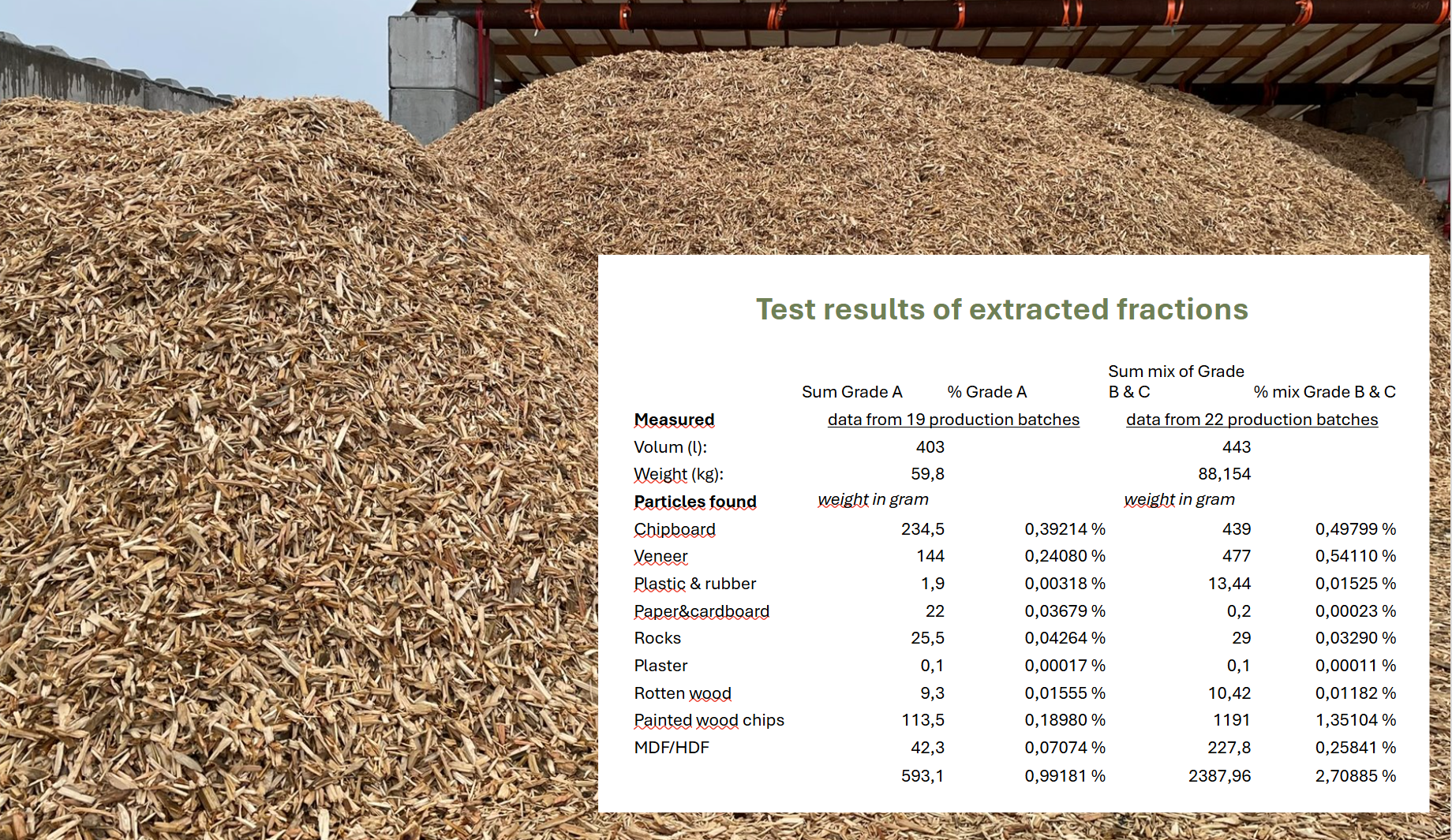
Our Research and Development is Measured Against the Following Success Criteria:
- Profitable material recycling
- Increased material recycling rate
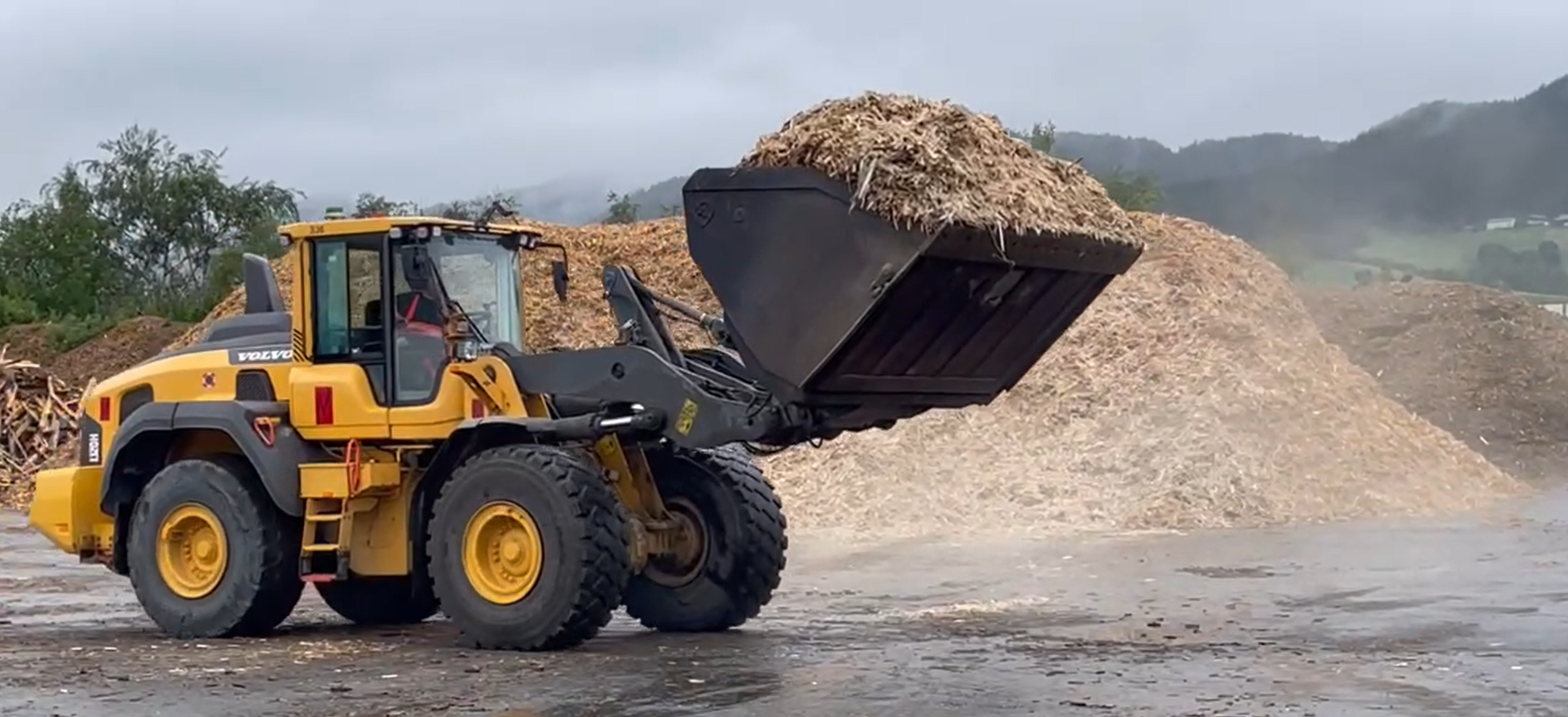
We operate a full-scale R&D and validation facility for waste wood recycling in Orkanger – Norway, in operation since November 2023. The facility is used for end-to-end testing of integrated process configurations, including shredding, screening, magnetic separation, metal detection, and AI-based optical sorting, while also supporting continuous production of secondary raw materials. With a processing capacity of approximately 50 m³ per hour, it provides industrially relevant conditions for technology development, performance verification, and generation of high-volume process and material data.
In parallel, we have collaborated with contractors, demolition companies, waste operators, panel manufacturers, and architects to identify technical bottlenecks and value-creation opportunities across the waste wood value chain. This work has helped define priority application areas, material specifications, and process requirements for increasing recycling rates and reducing the cost of material recovery.
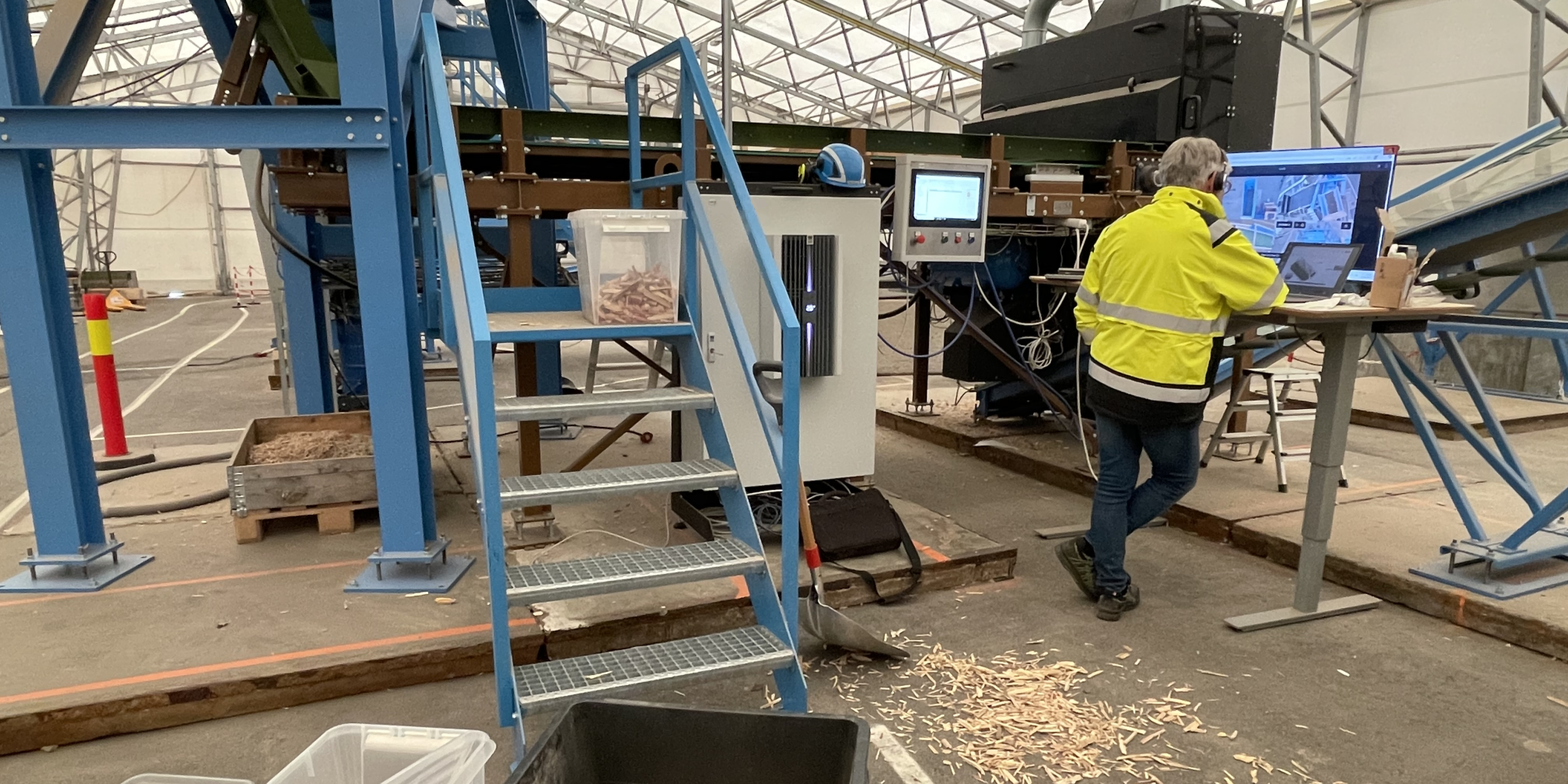
Testing of new AI models on the sorting machine.
Profitable material recovery from waste wood
Profitable waste wood recycling depends on two things: precision and volume. The material must be sorted cleanly enough to go directly into new production, and the line must handle enough cubic meters per hour to make material recovery financially stronger than incineration. Our technology is designed to do both.
Our technology transforms mixed waste wood into three distinct value streams. This multi-fraction separation optimizes your total material recovery and reduces your dependency on volatile energy prices:
- Premium Fraction: High-purity wood tailored for demanding, lucrative applications like biochar production, soil improvement, and metallurgical processes.
- Industrial Fraction: Clean, consistent wood chips optimized for high-volume panelboard and fiberboard manufacturing.
- Residual Fraction: Isolated contaminants and non-recyclable materials safely directed to controlled incineration in specialized plants.
By upgrading low-value waste into high-demand raw materials, this line ensures full compliance with the EU Renewable Energy Directive and EU Waste Hierarchy Guidelines.
Increased material recovery
Understanding the requirements of secondary raw material as a means of production in various products is essential for increasing material recovery rates. Eco materials R&D toward increasing material recovery rates investigates:
- Production processes that make the secondary raw material suitable as a production mean in several new products
- Increased traceability and documentation that reduces risks associated with using the secondary raw materials in existing production lines
- Wholistic evaluation of the entire value chain from collection to production in order to identify the sources of material loss
We have tested production throughout an entire year with all the weather elements that operating in the Central Norway region entails. With temperature variations of +30c to –21c, snow and ice, rain and wind, we have gained valuable insight into the external challenges affecting material properties, material recovery and recycling plants.
Mapping material properties
Knowledge about the materials found in waste wood and how they may change physical properties under different temperatures and humidity levels is crucial for building an efficient material flow and AI models. We have divided our R&D in this area into the following categories:
- Wood-based products such as solid wood and wood panels, and the factors that may influence the recycling rate and cost. This includes, among other things, heat, moisture, and frost.
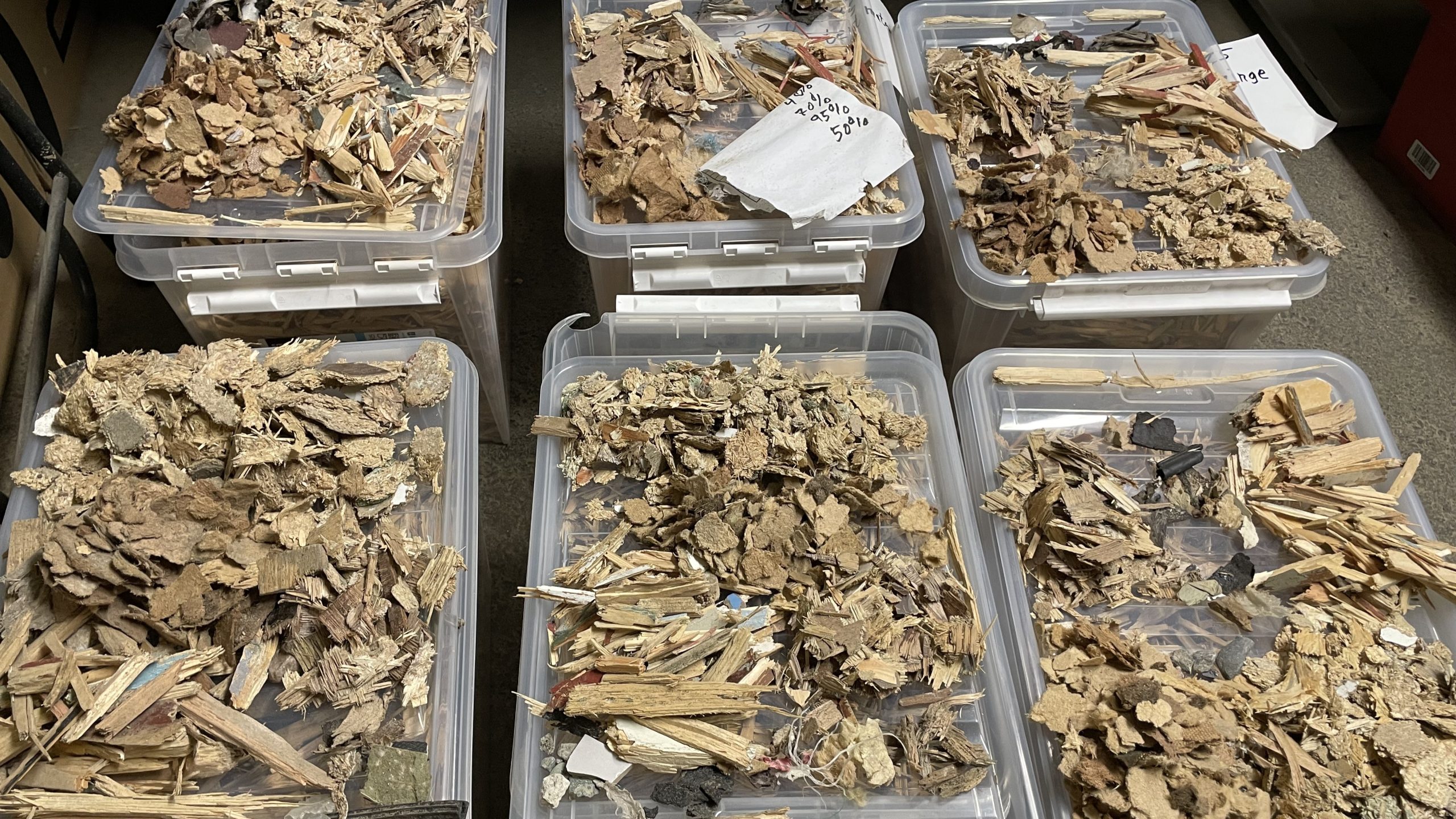
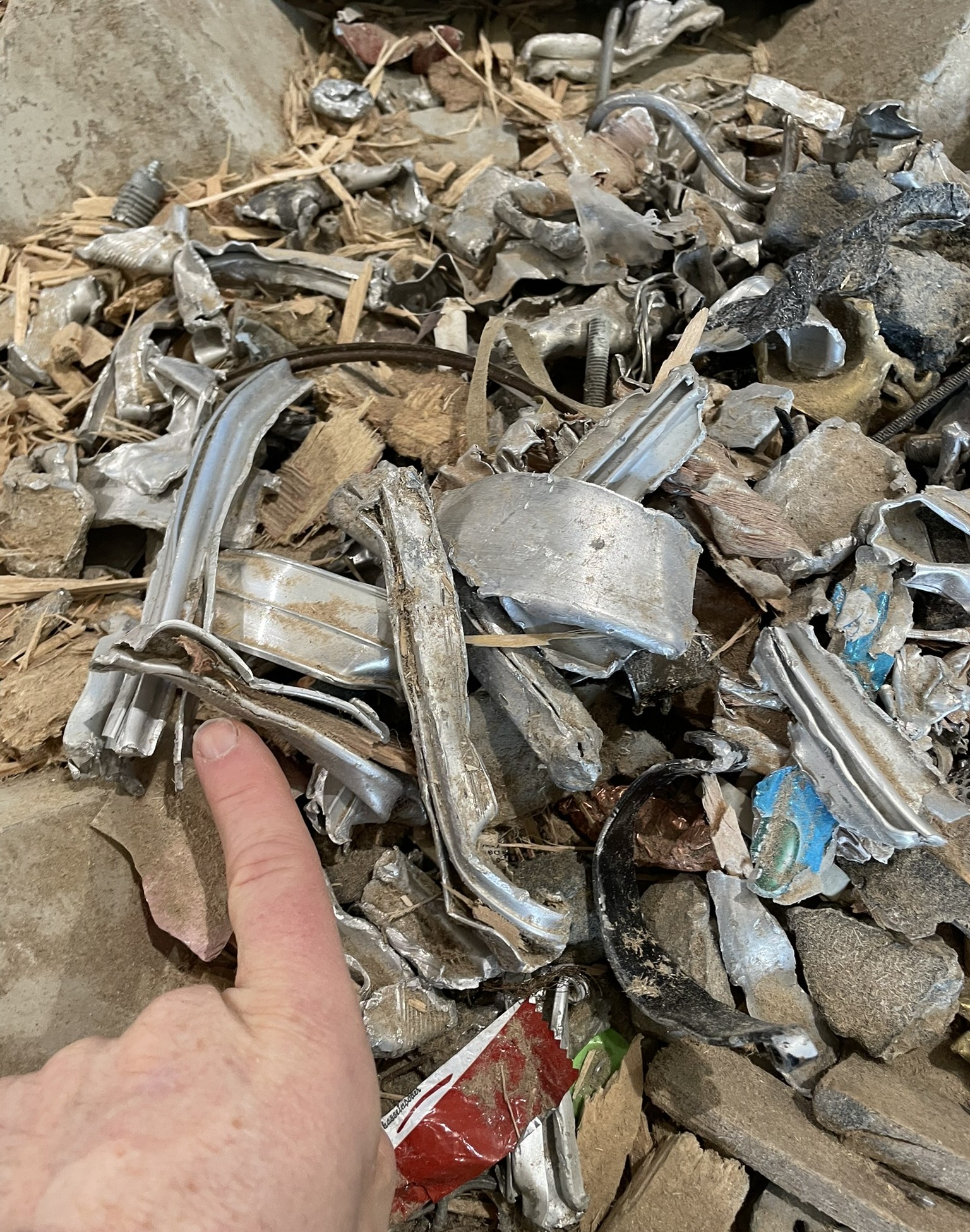
- Unwanted objects such as plastic, metal, insulation materials, minerals, and chemicals.
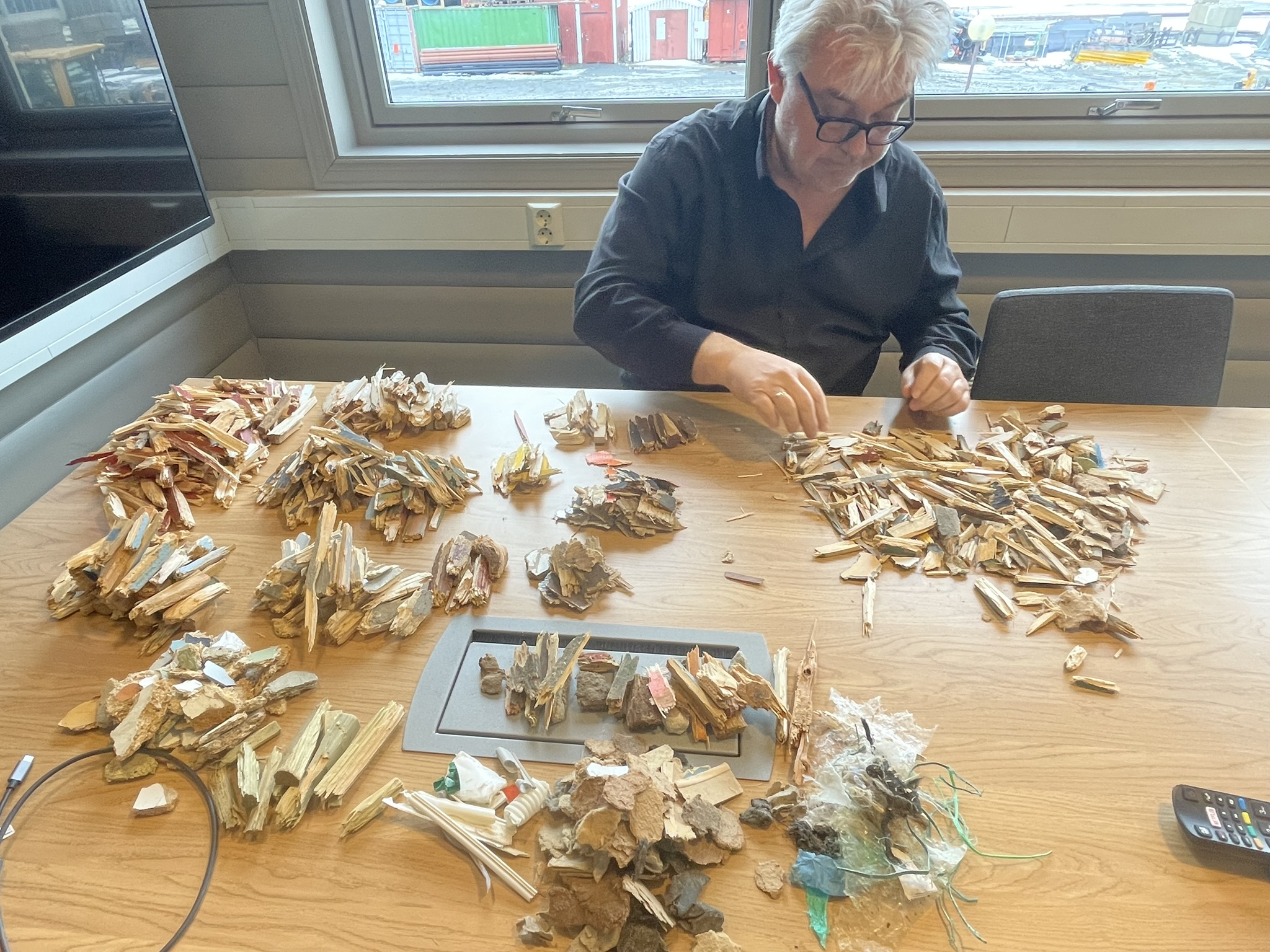
Manually defining unwanted elements for machine learning
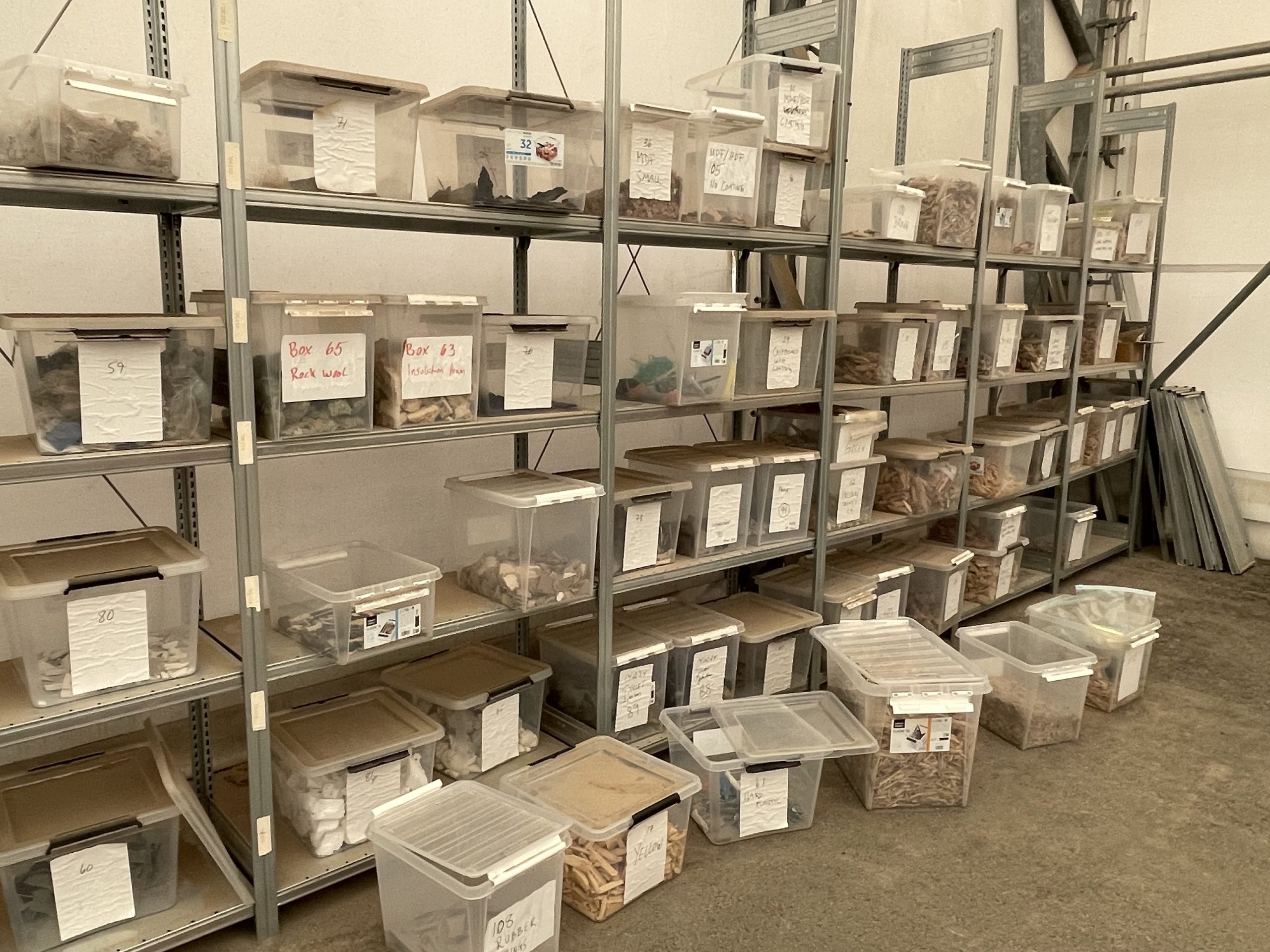
Test materials used for analyzing different AI model sorting abilities
Use of AI for sorting
The core of our technology lies in the ability to detect and determine the correct action for objects in a material flow. We have tested both self-learning and static models in order to find the best fit for various conditions. The focus areas for R&D regarding AI are:
- Which models are most precise based on the materials they need to sort and at times of rapid variations in the material properties
- What affects the AI model’s ability to make correct decisions, quickly and precisely
- Training on relevant products under relevant conditions for mass production
Removal of metals
Removal of metal is considered a key factor for all secondary raw materials, with the exception of incineration in large industrial facilities. In order to control which residual metals may be present in the secondary raw material, we have chosen to combine the use of magnets and metal detectors. Our experience with Eddy Current technology is that it is expensive, large, and does not provide sufficient precision for most products that can utilize secondary raw material produced from reclaimed wood. The main areas for R&D in metal removal are:
- Guarantee the maximum size of residual metal materials in the raw material
- Reduce material loss during metal removal
- Develop robust metal detectors that operate reliably in harsh environments
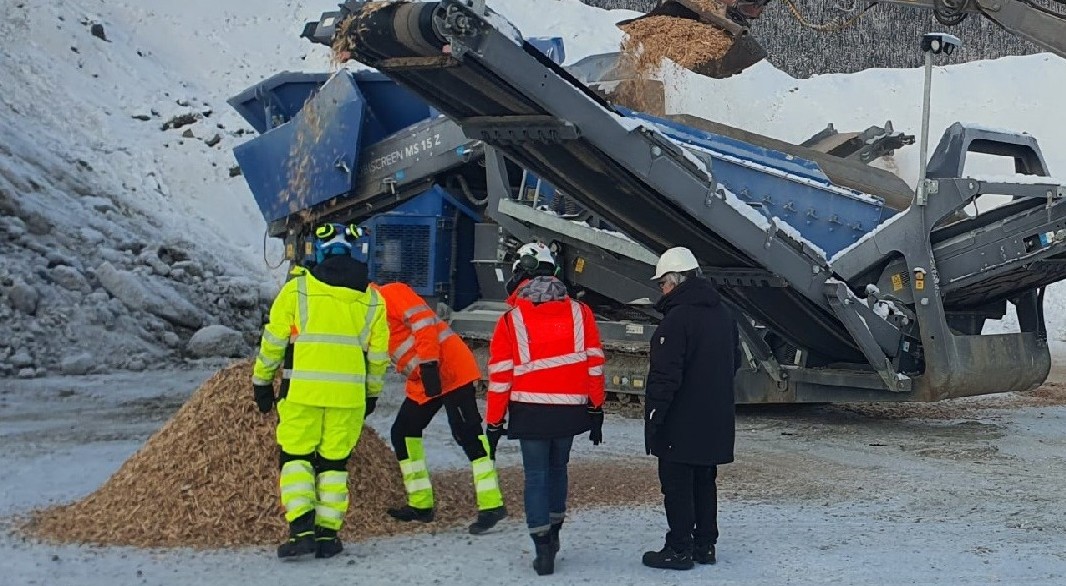
Test of shredding and sifting in -16 c degrees
Shredding and sifting
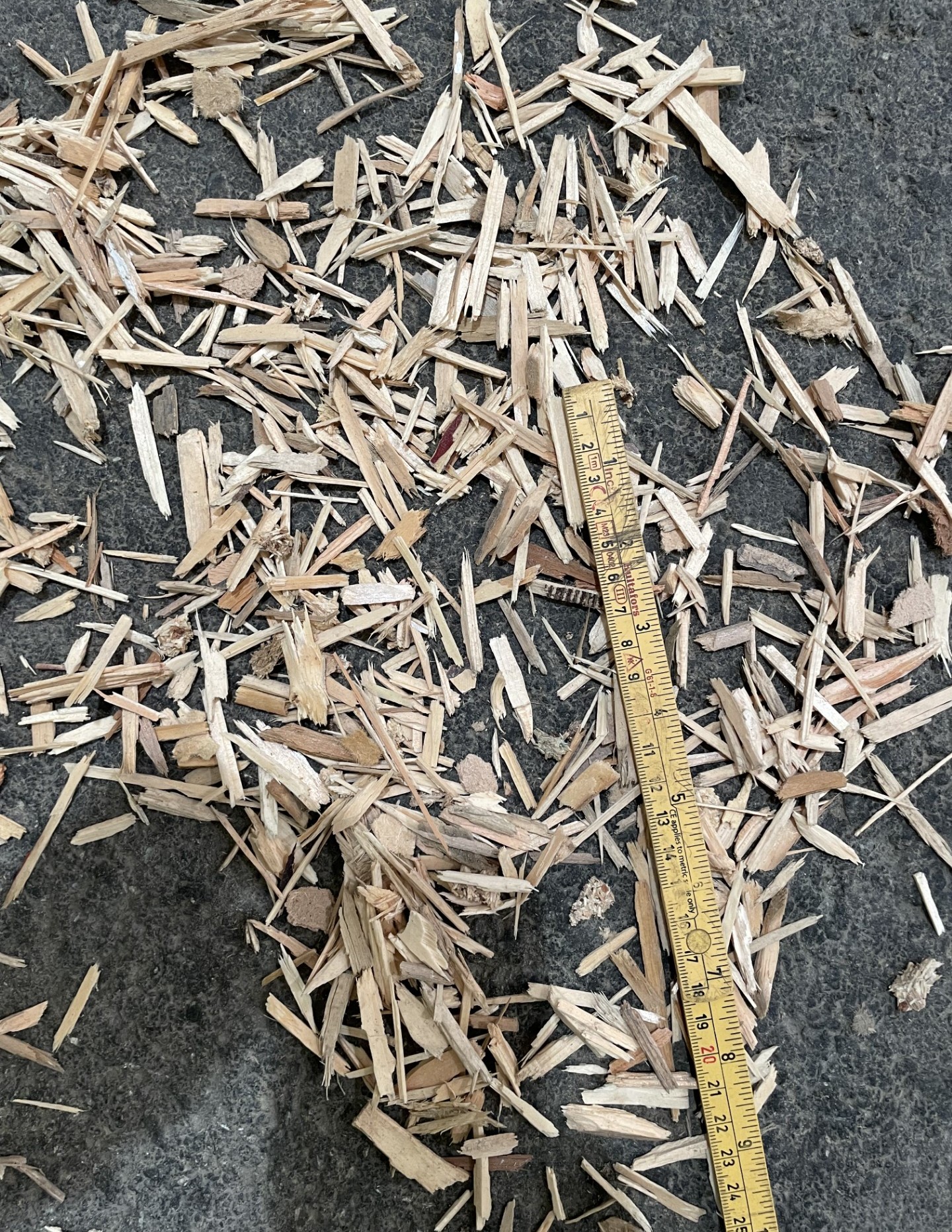
Shredding is the first step in the processing of waste wood and has a significant impact on the material quality and cost. In our experience, there is limited market knowledge of shredding processes in regard to increased material recovery goals. Manufacturers of shredders are primarily encouraged by waste companies to expand volume capacity, rather than the shredding precision essential to effective sorting in the subsequent steps of material recovery and recycling. The focus areas for R&D in shredding and sifting are:
- Shredders that deliver high geometric precision
- Wood chip geometry that results in effective material flow in the sorting process and which increases the volume in a camera-based sorting system
- Reducing material loss
Removal of light particles
Light particles with irregular flight patterns (dust, thin plastics, paper, and small MDF pieces) are not ideal for removal using optical sorting. They interrupt sensors and reduce the precision of sorting by blocking the cameras’ view. eco materials has developed our own system for removing these light particles from our sorting process. Effective systems are available on market, however, these are often large and costly in comparison to the amount of material that needs removal. The main areas of R&D for shredding and sifting are:
- Development of small, cost-effective systems
- Reducing particles that have negative implications on the sorting machine and/or particles that the machine is not suited for removing
Testing and documentation of the end product
The key to increased material recovery and lucrative recycling is to create products from waste wood that can be used as material input in multiple production streams and end products. We do not only deliver the technical mechanisms for sorting, but the entirety of the production process that enables effective production of secondary raw materials from waste wood. The focus points of R&D in testing and documentation are:
- Complete process for production of secondary raw materials that meet requirements of multiple end-products that utilize wood chips as an input factor in their production
- An approved end-of-waste process for products